
By Harry White
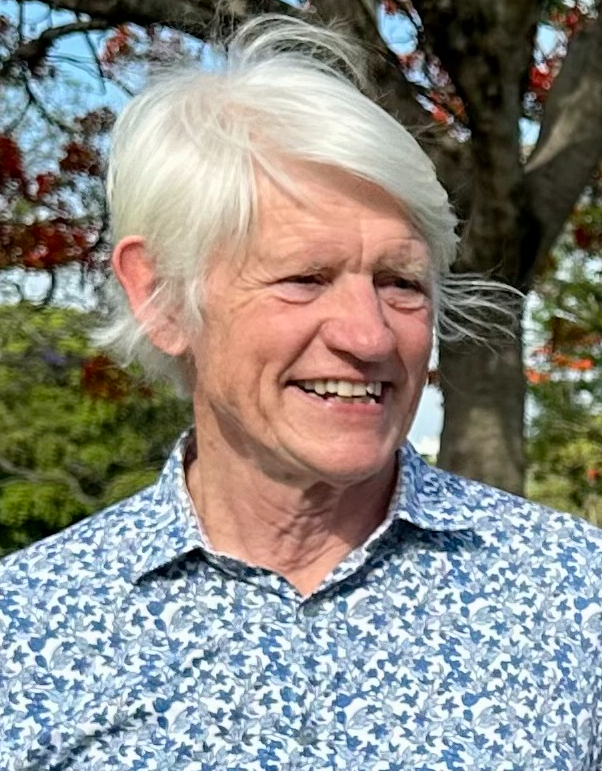
Professor Barra Boydell, who passed away after a brief illness on 22 April 2026, was a distinguished scholar whose contribution to musicology in Ireland was immense. His achievements in organology, iconography and the history of Irish church music, together with his prowess as a lexicographer, permanently altered and enriched the landscape of Irish musical research. As a founding member and first honorary secretary of the Society for Musicology in Ireland, he was a vital, generous and decisive participant in the development of musicology as a public-facing discipline in Irish life. As a lecturer in the Dublin College of Music (now the TU Dublin Conservatoire) from 1982 until 1990, and most especially as a lecturer, senior lecturer and professor of musicology at Maynooth University (from 1990 until his retirement in 2010) he assiduously cultivated the study of Irish musical history as an indispensable feature of both undergraduate and graduate curricula. As a supervisor of graduate research he had few peers, and he was much beloved as a university teacher. Elected to honorary membership of the SMI in 2011, he received the IRC-Harrison medal from the society in 2014 in recognition of his general editorship of The Encyclopaedia of Music in Ireland (EMIR).
By the time I came to know Barra in the late 1980s (we were both active members of the Irish Chapter of the Royal Musical Association, which was founded in 1987 by Hilary Bracefield), he was already well-established as a scholar. He had completed a PhD in organology in 1981 (he took justifiable pride in the fact that he was one of the first people, after Ita Beausang [née Hogan] in the early 1960s, to have written a doctoral dissertation in musicology registered in an Irish university) which became the basis for his first book, The Crumhorn and Other Renaissance Windcap Instruments (1982). This was a definitive study (and remains so to this day), but very soon afterwards Barra began to expand the domain of his research interests to include iconography and reception history. Music and Paintings in the National Gallery of Ireland appeared in 1985, and in the following decade he published important essays on Irish musical patronage, the iconography of the Irish harp and a host of other related subjects. (A glance at the vast bibliography attached to Robin Elliott’s exemplary entry on Barra Boydell in EMIR would confirm the prolificity of his writings on Irish musical history from 1985 onwards). His extensive archival research on church music produced two books: Music at Christ Church before 1800: Documents and Selected Anthems (1999), and A History of Music at Christ Church Cathedral, Dublin (2004).
Between 1990 and 2013, Barra and I worked closely together on several projects. The first of these was Irish Musical Studies (he contributed an essay on the flageolet in Ireland to the inaugural volume, Musicology in Ireland, in 1990, and remained closely associated with the series throughout the 1990s and early 2000s as a contributor to several other volumes, and as co-editor of volume 10, Music, Ireland and the Seventeenth Century with Kerry Houston in 2009). The second was the formation of the SMI in 2003 (he had served as a member of the steering committee which brought the society into existence in 2002, and we were both elected to serve on the first council of the society from 2003 until 2006). The third project, of course, was EMIR. In addition to his role as general editor of EMIR, Barra also undertook responsibility as subject editor for art music between 1600 and 1800 and for both organology and musicology. And he wrote dozens of entries on composers, instrumentalists, various aspects of the Irish music trade and much else besides for EMIR. Awarded a Government of Ireland Senior Research Fellowship to work on the project in 2005, he devoted the greater part by far of his musicological career to EMIR between then and his departure for Sydney at the very end of 2010 (although he remained fully active as general editor thereafter).
Many of my most cherished memories of Barra stem from July 2009 to December 2010, when much of the general editing of EMIR took place in my room in UCD. We would spend long afternoons there going over the latest batch of entries forwarded to us by the subject editors (after which Barra would forward them in turn to the executive editors) and with heroic patience he bore with me as I read the entire main text of the encyclopaedia aloud to him over the course of sixteen months to test its readability, grammar and coherence. We made many changes and experienced a few near misses, and often enough we would reminisce or speculate about the countless musicians and other personalia who featured in the entries under our scrutiny. I could not have asked for a more agreeable co-editor. He was the most even-tempered, placid and consistently benign collaborator imaginable and I don’t hesitate to add that he was also the perfect foil to my more demonstrative (not to say excitable) personality. There were some exceptionally gifted people who worked very hard to bring EMIR into the world, but Barra’s gentle and gracious temperament was a thing unto itself, and to experience it over such a long period was one of the greatest privileges of my working life.
I saw less of Barra in the years following his retirement to Australia, although I shall never forget our mutual and heartfelt rapture when EMIR was launched in Dublin in October 2013 and again at the New York launch in February 2015. Barra returned regularly to Ireland in the summer months during which we often met, and when I went to Sydney to deliver lectures at the Conservatory of Music in 2022, Barra and his wife Irena were there, not only to attend my talks but to host me in their beautiful home at the end of my visit. By then, Barra had very significantly reduced his scholarly activities in favour of music itself, and he was an enthusiastic and gifted member of a string quartet in Sydney which brought him much pleasure. He was an accomplished violist, and long before I met him played the viola as a member of the Dublin Orchestral Players and even on occasion as a professional deputy in the RTÉ Light (now Concert) Orchestra. Both within the domain of his research interests in early music (specifically as co-founder with Andrew Robinson of the Consort of St Sepulchre in 1967) and far beyond them, he was a passionate admirer and exponent of western art music, including most especially German and Austrian music of the nineteenth century.
I cannot close this remembrance without acknowledging the lifelong influence of Barra’s father, the composer and scholar Brian Boydell, on Barra’s own career. During our EMIR years, Barra spoke to me so often and so affectionately about Brian (whom I also knew in the later years of his life) that it was impossible to understand this influence as anything other than an entirely positive one. And as matters transpired, Barra’s final publications centred upon his father’s legacy. Rebellious Ferment: A Dublin Musical Memoir and Diary was edited by Barra in 2018 and published under the Atrium imprint of Cork University Press. And in 2022, UCD Press published Creative Impulses, Cultural Accents: Brian Boydell’s Music, Advocacy, Painting and Legacy, a collection of essays edited and introduced by Barra and Barbara Dignam. I had the privilege of launching this book at the Irish Georgian Society, and during the course of my remarks I quoted from Barra and Barbara’s introduction, in which they observed that ‘[Brian] Boydell never felt truly accepted as an Irishman in his own time’. I went on to conclude that ‘without Ireland, without the cultural chauvinism and (often enough) the religiously-inflected atavism of mid-twentieth-century Ireland, Brian Boydell would have had nothing to rebel against, and nothing against which to test his own impulses as a composer, teacher, advocate and musician. Brian needed Ireland, in other words, as much as Ireland needed him.’ As I think of Barra in the deeply sad aftermath of his unexpected passing, I feel inclined to a similar (if distinct) reading of his indispensable scholarship and the passionate convictions that animated it. Barra’s impulses as a scholar and as an Irishman were in the very finest sense Yeatsian. He cared as much for the wilds of the Beara Peninsula as he did for the urban culture of Dublin musical life in the seventeenth century. His home life was supremely happy. And he was an immensely resourceful and practical man. But I shall always think of him as a person of exceptional grace and forbearance, whose passion for music and history alike was constantly underwritten by an unflinching and humane regard for sheer kindness. May he rest in peace.